


In recent years, technological advances in the automotive industry have led to a gradual shift from mechanical systems to increasingly electronic solutions. This shift has improved comfort and driving precision, but has also made diagnosis and repair more complex.
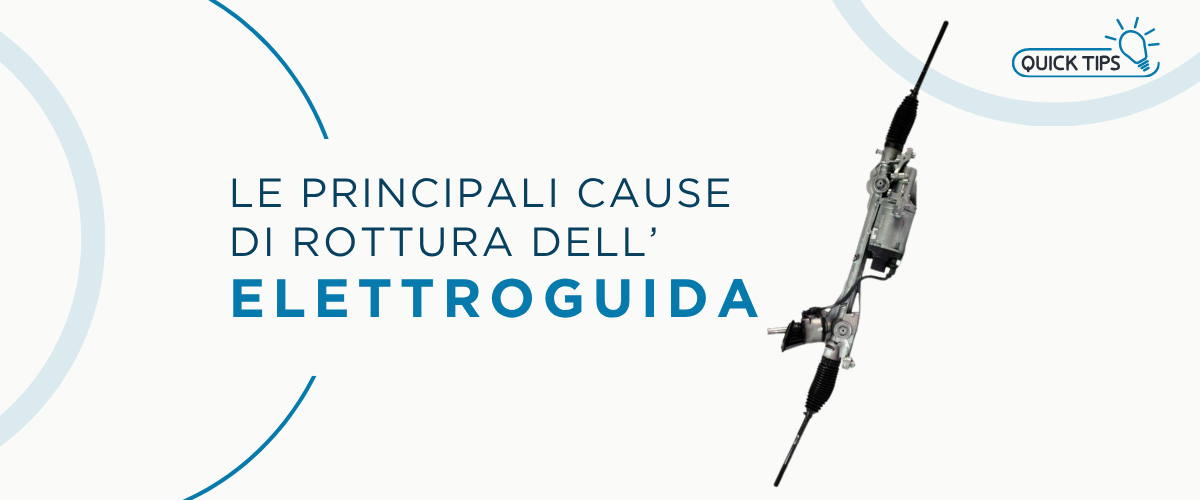
A significant example is the Electro-guide, which, compared to traditional mechanical or power steering boxes, integrates a mechanical component with an electronic system consisting of a control unit and electric motor, ensuring more efficient and precise power steering.
Due to its hybrid nature, the causes of power steering failure can be classified into two main categories: mechanical and electronic issues.
Mechanical Failures
Mechanical anomalies are often related to the wear of internal components. Among the most common are deterioration of the bushings on the rack rod, which can generate abnormal noise, especially when driving on rough roads.
Other common causes include:
- Oxidation of the rack rod;
- Worn rack teeth;
- Abnormal play due to worn components.
These conditions, if not detected promptly, can compromise the proper functioning of the steering and the safety of the vehicle.
Electronic failures
Electronic problems are generally more complex to diagnose and resolve. They may be caused by:
- Wear of internal electronic components;
- Water or moisture infiltration;
- ECU malfunctions.
In these cases, in addition to repairing or replacing the component, an electronic system configuration by a dealer is often necessary. This is a crucial step for restoring proper functionality and requires appropriate equipment and specific skills.
The importance of professional diagnosis
Correctly identifying the cause of the fault is crucial to ensuring effective and long-lasting repairs. For this reason, it is essential to rely on qualified professionals equipped with advanced equipment and up-to-date know-how.
A professional approach allows you to not only solve the problem, but also prevent any future malfunctions, ensuring optimal performance and driving safety.