


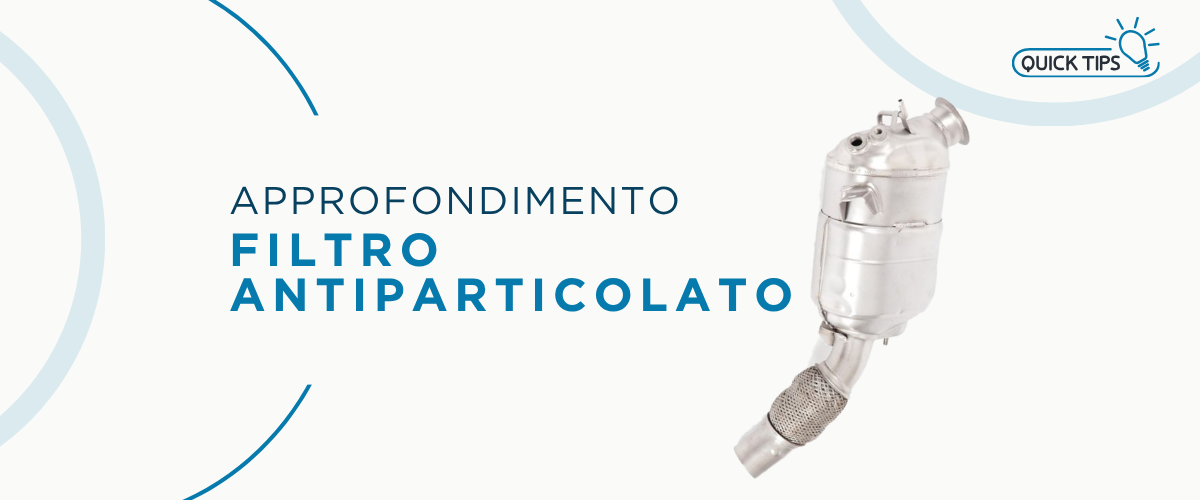
The particulate filter, also known as FAP (Anti-Particulate Filter) or DPF (Diesel Particulate Filter), is a key component in modern vehicles for reducing particulate emissions.
Initially introduced on some Euro 4 models, it became mandatory with the Euro 5 regulations, and today it represents one of the key elements for compliance with environmental standards.
How the particulate filter works
The operating principle is common to all systems: the filter traps soot particles produced by diesel engine combustion, preventing them from being released into the atmosphere.
If this process does not occur correctly, the filter can become clogged, compromising engine performance.
Differences between FAP and DPF
Although they are often considered equivalent, there are some important differences between the two systems:
FAP (Anti-Particulate Filter)
- Installed downstream of the exhaust manifolds;
- Equipped with a silicon carbide filter element;
- Uses a specific additive to facilitate regeneration;
- Reduces the combustion temperature of particulate matter to approximately 450°C.
DPF (Diesel Particulate Filter)
- Does not use additives;
- Increases the exhaust gas temperature to 600–650°C;
- Uses post-injections of fuel to initiate regeneration.
Regeneration: a delicate process
Active regeneration can take several minutes and requires specific conditions to complete properly.
Situations such as short trips, city traffic, and frequent starting and stopping can prevent the necessary temperatures from being reached.
The result is a very precise sequence: incomplete regenerations, accumulation of particulate matter and consequent clogging of the filter.
When this happens, the vehicle signals the problem via a dedicated warning light on the dashboard, indicating the need for intervention.
What happens when the filter is clogged?
If regeneration is no longer able to clear the filter:
- Engine performance is lost;
- Fuel consumption and emissions increase;
- There is a risk of damage to other components.
In some cases, even forced regeneration in the workshop is not enough, requiring filter replacement, which is often expensive.
Beware of “do-it-yourself” solutions
Unprofessional interventions or improvised solutions can:
- Worse the problem;
- Damage the exhaust system;
- Compromise the vehicle’s operation.
Removing the particulate filter is even more serious:
- It is illegal;
- It drastically increases emissions;
- It can cause serious engine damage.
The solution: professional revision
To avoid high costs and ensure proper system operation, it’s essential to rely on industry professionals.
Depros offers specialized services in:
- DPF, FAP, and Catalytic Converter Inspection;
- Services performed with specific, certified equipment;
- Processes compliant with environmental regulations.
This approach restores filter efficiency, reduces costs compared to replacement, and ensures optimal vehicle performance.
Conclusion
The particulate filter is an essential component for reducing emissions and protecting the environment, but requires proper attention and maintenance.
Proper vehicle management and professional inspections help avoid breakdowns, reduce costs, and ensure long-term reliability. Choosing certified solutions means not only protecting your engine but also making a concrete contribution to protecting the environment.