


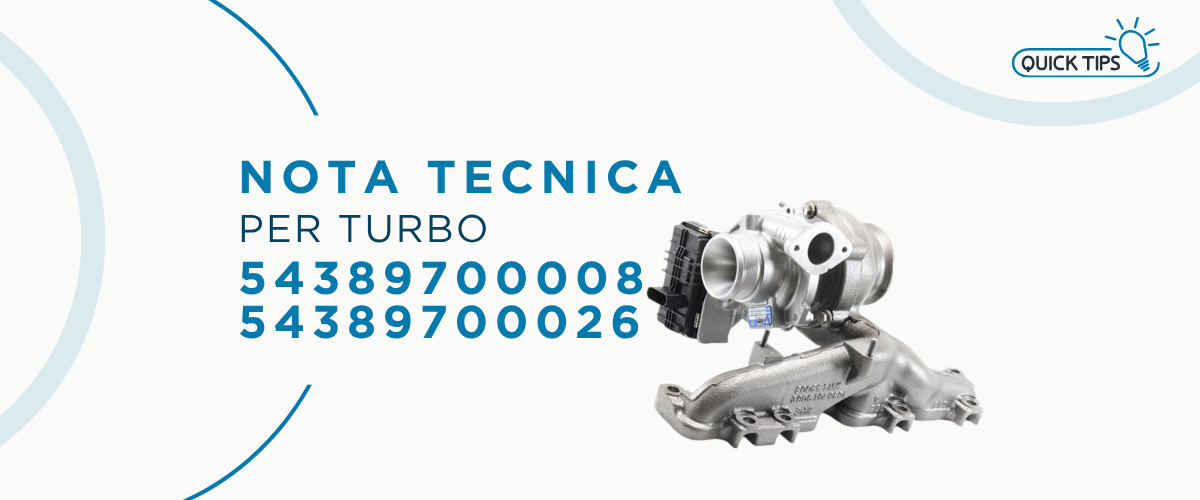
This technical note provides basic instructions for turbocharger replacement. It applies to any type of turbocharger, with particular reference to models 54389700008 and 54389700026.
Why Engine Cleaning is Important
When a turbocharger fails, it can release metal debris and residue that lodges in hard-to-reach areas of the engine. If this debris is not removed, it risks being sucked in during the next start-up, causing damage to the newly installed turbocharger.
For this reason, thorough extraordinary maintenance is essential before installing the replacement turbocharger.
Items to Clean or Replace
Before installing the new turbocharger, it is essential to check and, if necessary, clean or replace the following components:
- EGR System: High pressure (gas exiting the manifold) and low pressure (gas exiting the DPF);
- Intake system: manifold, bellows, throttle body;
- Intercooler and intercooler hoses;
- Exhaust system (DPF, catalytic converters, manifolds);
- Air filter and air filter housing;
- All air ducting on the engine.
Debris in the combustion chamber
Particular attention must be paid to debris that may be drawn into the combustion chamber, as it cannot be removed with normal cleaning.
Before installing the new turbo, ensure that all debris is completely expelled to avoid irreversible damage to the turbocharger.
Risks of incomplete cleaning
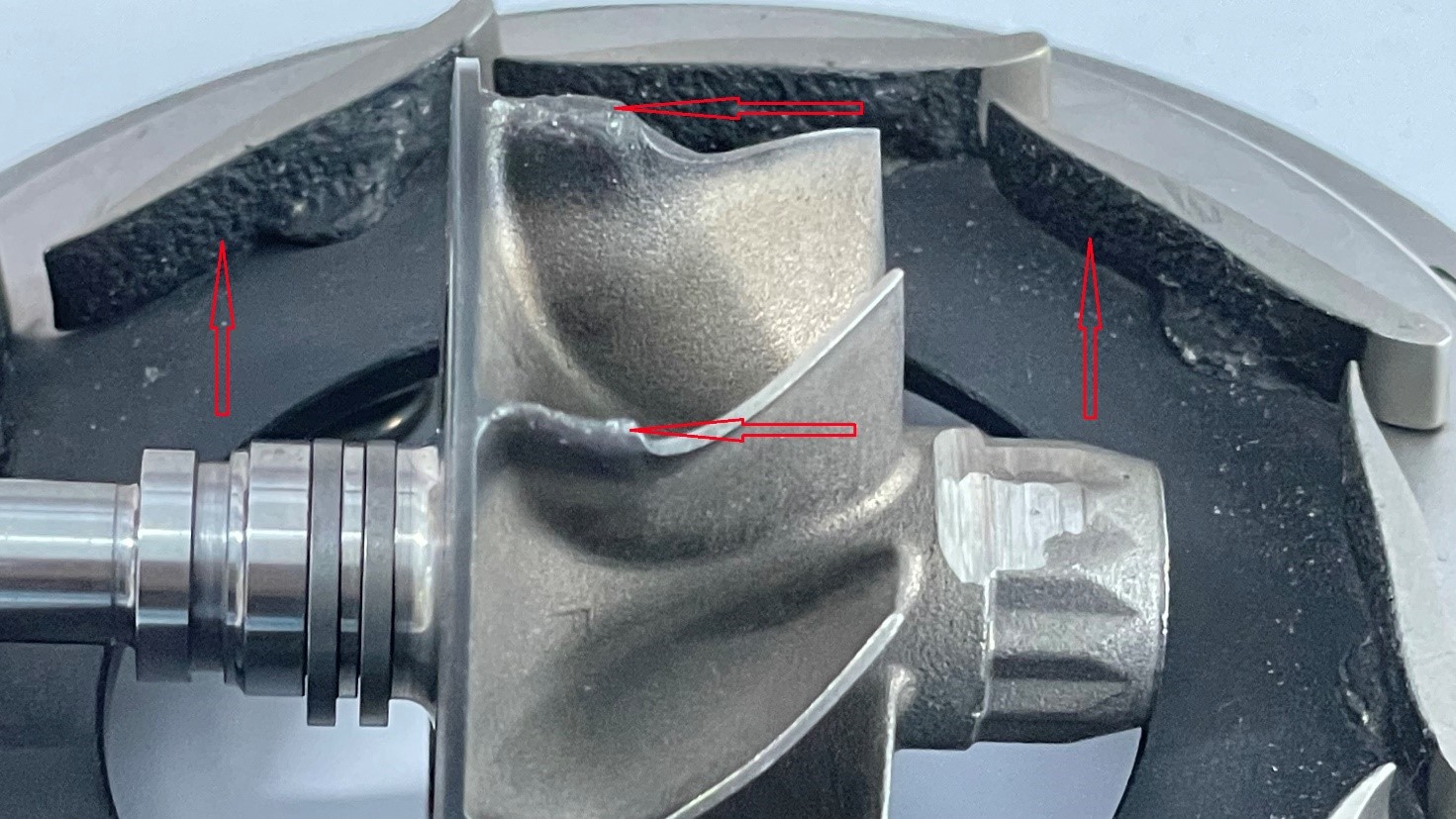
If debris is not removed properly, it can be expelled from the exhaust system and impact the compressor wheel and the variable geometry of the turbo, causing:
- Damage to the compressor wheel;
- Variable geometry malfunction;
- Significant reduction in the lifespan and performance of the new turbocharger.
Conclusion
Replacing a turbocharger isn’t just about installing the new component. Thorough maintenance and the removal of debris from the previous failure are essential to protect the new turbo and ensure optimal engine performance.